





Cloud computing is absolutely booming, and it’s not just a buzzword anymore – it’s a total game-changer!. We’re talking about a market that’s set to zoom past $1 trillion by 2028 globally, hitting a massive $912.77 billion in 2025.
End-user spending on public cloud services alone is forecasted to reach $723.4 billion in 2025!
Isn’t that astonishing?
Companies everywhere, from huge enterprises (over 94% are adopting cloud!) to smaller businesses (SMBs are shifting over half their tech budgets to cloud by 2025!), are jumping on the cloud train.
And why wouldn’t they? The benefits are just too compelling to ignore.
It’s not just about remote work anymore, though that certainly gave cloud adoption a big boost after 2020. Cloud infrastructure is powering exciting stuff like big data analytics, AI, Machine Learning, and the Internet of Things (IoT)! Businesses are seeing real results: boosting gross margins and profitability, generating more revenue, achieving faster time to market, and dramatically reducing upfront startup costs. Plus, switching to the cloud can seriously slash your Total Cost of Ownership (TCO) – we’re talking as much as 40% reduction by migrating to the public cloud!
But here’s the scoop: while cloud offers incredible flexibility and scalability, managing it all can feel like a juggling act with chainsaws!. Many organizations find their cloud costs are actually higher than expected. And get this – cloud waste is a BIG problem!. Sources show that as much as 32% of a cloud budget went to waste in 2022, and some reports even suggest it could be as high as 47%!.
Yikes!
Lack of visibility into cloud costs is a major culprit. It’s shocking, but 7 out of 10 companies aren’t sure what they spend their cloud budget on. Trying to connect those complex cloud bills with actual business goals, like cost per customer or per product feature, can be super tricky. And let’s not even start on juggling multiple tools to manage everything.
Feeling overwhelmed yet?
Don’t be!
This is where Cloud Managed Services swoop in like the heroes they are!
So, What Exactly ARE Cloud Managed Services?
Think of cloud managed services as your expert co-pilot for your cloud journey. Instead of your internal IT team handling every single technical detail, you outsource the oversight and administration of your cloud infrastructure to a specialized third-party provider.
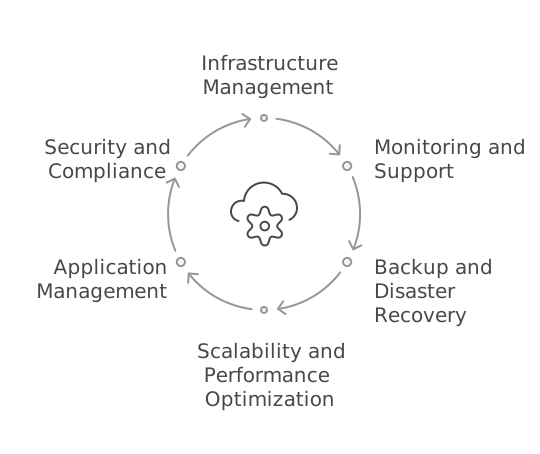
These providers take responsibility for a whole bunch of crucial tasks, including:
- Infrastructure Management: They handle the nuts and bolts – servers, storage, networking, making sure everything is configured just right and running smoothly.
- Monitoring and Support: They constantly keep an eye on your cloud environment, spotting and fixing issues proactively before they cause headaches. They offer support, often available 24/7.
- Backup and Disaster Recovery: Protecting your data is paramount! Managed Service Providers (MSPs) set up robust backup and disaster recovery plans to keep your business running, even if something unexpected happens.
- Scalability and Performance Optimization: They help you adjust your resources based on demand, ensuring peak performance without overspending.
- Application Management: Managing the applications running on the cloud – installation, updates, patching, troubleshooting – they’ve got it covered.
- Security and Compliance: Staying secure and compliant is massive, especially in regulated industries. MSPs work with proven, compliant systems, handling regular assessments, encryption, intrusion detection, and ensuring updates are applied.
By taking on these responsibilities, MSPs free up your internal teams to focus on what they do best – building your business and driving innovation!

Suggested reading:
Inconsistent Software Deployments? Streamline Operations with DevOps Automation in 2025
The AMAZING Benefits of Managed Cloud Services!
Partnering with an MSP isn’t just about offloading tasks; it’s a strategic move that unlocks a cascade of benefits. Let’s dive into the good stuff!
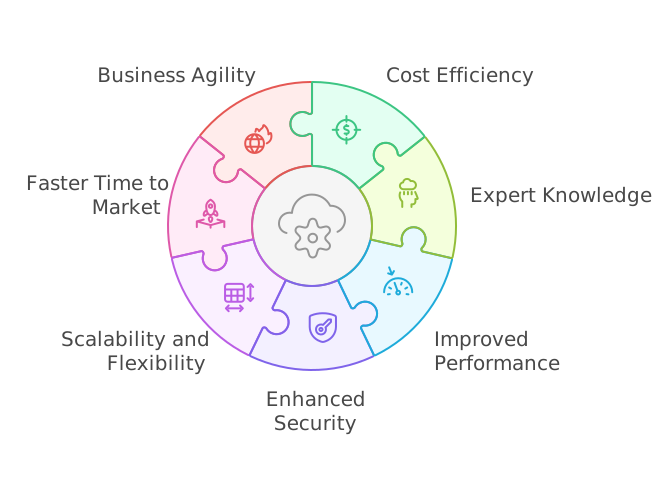
Cost Efficiency & Predictable Spending
MSPs are ninjas at optimizing resource allocation, helping you pay only for the resources you actually use and cutting out unnecessary expenses. They can help you understand where your costs are going and sometimes even offer tiered plans for more predictable budgeting. Imagine reducing your cloud bill significantly, freeing up funds for growth!
Access to Expert Knowledge
You don’t need to hire a whole team of cloud wizards. MSPs have dedicated specialists with deep expertise in various cloud technologies, security, and optimization. They bring that knowledge to manage your complex infrastructure.
Improved Performance and Reliability
With proactive monitoring and performance tuning by experts, your cloud infrastructure and applications will hum along efficiently and reliably. Less downtime means happier customers and employees!
Enhanced Security Posture
Security is a top concern for 95% of companies in the cloud, and for good reason – cybercrime is costly!. MSPs implement robust security frameworks, industry standards, and advanced protocols like firewalls and encryption. They stay ahead of threats and ensure your systems are patched and compliant. That’s peace of mind!
Scalability and Flexibility
Cloud is inherently scalable, but managing that scaling takes effort. MSPs make it even easier, helping you adapt to changing demands – whether it’s rapid growth or seasonal spikes – without disruption. They handle the dynamic adjustments so you don’t have to.
Faster Time to Market
No more waiting ages to provision hardware. MSPs can streamline setup and scaling, accelerate deployment with automation tools, and handle operational tasks like security and monitoring. This helps you get your products and services out there faster!
Business Agility and Resilience
By taking on the IT heavy lifting, MSPs help your business become more agile and resilient. You can respond faster to market changes and rely on their robust infrastructure and disaster recovery plans.
It’s clear that cloud managed services can significantly enhance your operational efficiency, boost profitability, and help you stay competitive in the digital landscape.
Is Your Business Ready for Seamless, Scalable Cloud Web Hosting?
Empower your online presence with robust cloud hosting that ensures speed, security, and effortless scalability. From lightning-fast load times to built-in redundancy and 24/7 support, keep your website performing at its peak—no matter how fast you grow.
Are There Any Catches? A Look at Potential Challenges
While managed cloud services are pretty fantastic, it’s also smart to be aware of potential challenges. This helps you make the best decision for your specific needs.
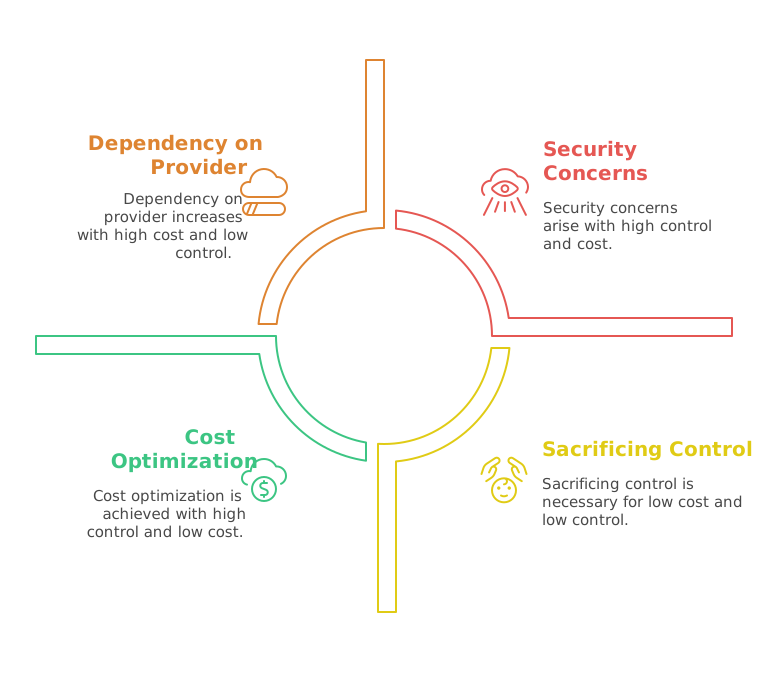
Sacrificing Some Control
When you hand over management to a third party, you naturally give up some of that granular, direct control over your cloud environment. If you have super specialized needs or handle extremely sensitive data, this is something to weigh carefully.
Potential for Higher Costs (in some cases)
While MSPs absolutely help with cost optimization and can lead to long-term savings, there are upfront and ongoing service fees. It’s crucial to do a thorough cost-benefit analysis to see if the investment aligns with your budget and goals.
Dependency on the Provider
You’re relying on the MSP’s expertise, reliability, and responsiveness. Choosing a provider with a strong track record and solid service level agreements (SLAs) is key to mitigating this risk.
Security Concerns
Even with robust security measures from reputable MSPs, entrusting sensitive data to an external entity introduces an inherent layer of risk. Rigorously vetting the provider’s security practices, certifications, and data handling policies is absolutely essential.
The good news is that the benefits often outweigh these challenges, especially when you partner with the right provider.

Suggested reading:
Redefining Digital Protection: Managed Cloud Hosting Improves Website Security and Performance
Cloud Wins in the Real World!
We see enterprises achieving incredible success by leveraging cloud services (often with the help of managed services!)
- Pinterest uses the cloud and big data services to handle massive amounts of data and adjust to varying traffic.
- Apple powers Siri’s amazing AI capabilities through the cloud, allowing them to expand and adapt it over time.
- Even non-profits like Meals on Wheels moved their financial system to the cloud, saving over $500,000 and simplifying communication with volunteers.
These examples really highlight the transformative power of cloud adoption!
Cost-Benefit Analysis of Managed Cloud Hosting: Making the Smart Choice!
Deciding between managing your cloud in-house (or sticking with on-premises) and using a managed service provider often comes down to a cost-benefit analysis. It’s not just about the monthly bill; it’s about the bigger picture.
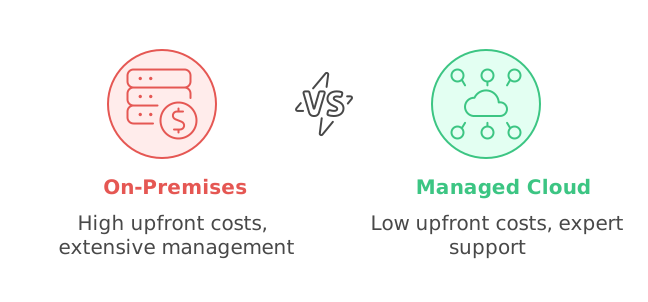
Consider the differences:
Upfront vs. Operational Costs
On-premises requires huge upfront investments in hardware and setup, plus ongoing costs for power, cooling, and maintenance. Cloud hosting generally has low upfront costs with pay-as-you-go operational spending. Managed services factor into that operational cost but can reduce expenses related to needing extensive in-house staff or managing waste.
IT Staffing
Do you need a large internal team to manage the complex cloud environment, or is it more cost-effective to leverage the provider’s team and expertise?
Scalability Costs
Scaling up on-premises means buying and installing more hardware. Scaling in the cloud (especially with an MSP) is often instant and based on usage, avoiding unnecessary hardware investments.
Disaster Recovery & Uptime
Building robust DR and ensuring high uptime on-premises requires significant investment and planning. Cloud providers offer high availability and DR capabilities (SLAs!), and MSPs help ensure these are effectively utilized. The cost of downtime is HUGE! Investing in reliability via managed services can be a major cost avoidance.
Compliance & Security Management
Meeting industry-specific regulations (like HIPAA, GDPR, PCI DSS) and implementing strong security on-premises is complex and costly. While cloud providers offer compliance, managing it effectively in a dynamic environment can be tough. MSPs bring expertise and proven systems to ensure compliance and security adherence.
For businesses with unpredictable demand or rapid growth, cloud hosting is often the clear winner due to dynamic scaling and pay-as-you-go costs. For those with extremely sensitive data or stringent regulations demanding absolute physical control, on-premises might seem necessary.
However, managed services bridge this gap, providing expertise and controls even for hybrid or private cloud setups.
Is Your Business Ensuring Peak Website Performance and Security?
Stay ahead of the curve with comprehensive website maintenance and support services that keep your site updated, secure, and running smoothly. From routine updates and performance optimisation to proactive troubleshooting, we ensure your website works as hard as you do.
What Kind of Managed Services Can You Get?
MSPs offer management for different cloud models:
- Infrastructure as a Service (IaaS) Management: Managing those virtual servers, storage, and networks.
- Platform as a Service (PaaS) Management: Helping with application deployment and platform optimization.
- Hybrid Cloud Management: Integrating resources across various public and private clouds.
Plus, they offer general services like cost optimization, application management, monitoring, and backup/recovery.
The Future is Bright with Managed Cloud
As cloud computing continues to accelerate and becomes a key driver of business innovation, the need for smart, efficient management only grows. With challenges like cost visibility, waste, and managing complex environments, leaning on expert Cloud Managed Services isn’t just convenient – it’s a strategic necessity for modern enterprises!.
They provide the expertise, tools, and proactive management needed to truly unlock the full potential of your cloud investments. By freeing up your internal teams and ensuring your cloud infrastructure is optimized, secure, scalable, and cost-efficient, MSPs empower your business to be agile, resilient, and ready for whatever the future holds!
Ready to transform your cloud experience and propel your business forward? Exploring Cloud Managed Services might just be your best strategic move yet!.
Maximise your ROI and streamline operations with a cost-effective, scalable cloud hosting solution tailored for modern businesses. Let’s explore how managed cloud hosting can drive growth and stability for your digital success.


