




You’ve invested significant time refining your content, researching keywords, and building backlinks—and rightly so. Yet many overlook a silent powerhouse behind every top‑ranked site: Web Hosting.
Your host influences core SEO factors—speed, uptime, security, and more—making it a hidden linchpin for search performance.
Let’s understand how web hosting impacts SEO, explore hosting types and key features, and share best practices for choosing or migrating to an SEO‑friendly host. By the end, you’ll know how to harness hosting to propel your site—and your rankings—to new heights.
Why Hosting Is an SEO Game‑Changer
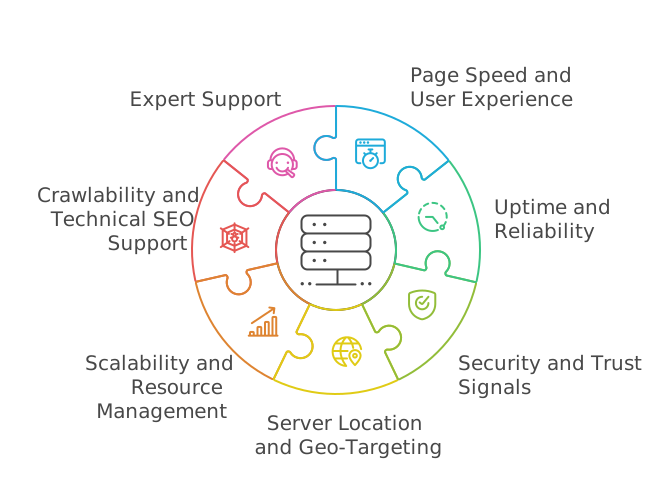
Page Speed and User Experience
Search engines obsess over user satisfaction, and nothing frustrates visitors more than slow pages. Studies show a site that loads in one second converts three times better than one that takes five seconds.
Google’s Core Web Vitals—including Largest Contentful Paint (LCP)—directly reflect your host’s performance. A quality provider leverages SSD/NVMe storage, optimized server stacks (NGINX, HTTP/2/3), built‑in caching, and even edge CDN integration to minimize latency and boost speed.
Uptime and Reliability
Every second your site is down means lost visitors, potential customers, and SEO credibility. Frequent downtime signals unreliability to search engines and can lead to de‑indexing. Look for hosts with 99.9%+ uptime guarantees, proactive monitoring, and auto‑healing infrastructures to ensure your site remains accessible to both users and crawlers.
Security and Trust Signals
Since 2014, HTTPS has been a confirmed ranking factor. SSL certificates encrypt user data, foster trust, and prevent browser security warnings that scare away traffic. Many SEO‑focused hosts offer free, auto‑renewing SSL and additional protections—firewalls, malware scans, DDoS mitigation, regular backups—all critical for safeguarding your site’s reputation (and rankings).
Server Location and Geo‑Targeting
Your server’s physical location impacts latency and local SEO relevance. A UK‑based server serves British users faster and signals local intent to Google when targeting that region. For global reach, leverage a Content Delivery Network (CDN) that caches content across multiple data centers worldwide, delivering fast load times regardless of visitor location.
Scalability and Resource Management
As traffic grows, resource demands spike. Cheap shared hosting may buckle under sudden loads, slowing your site or causing outages. Upgrading to a Virtual Private Server (VPS), dedicated server, or cloud plan guarantees dedicated resources, seamless scalability, and consistent performance—key to maintaining SEO gains as your audience expands.

Crawlability and Technical SEO Support
Effective SEO depends on reliable crawling and indexing. Budget hosts may throttle bots or generate crawl errors, delaying new content visibility.
An SEO‑friendly host supports:
.htaccessoverrides for redirects, canonical rules, and caching policies- Access to raw server logs for diagnosing crawl activity
- Full compatibility with SEO plugins and structured data tools
These functionalities give you technical control, ensuring search engines can discover, interpret, and rank your pages efficiently.
Expert Support When You Need It
Technical issues happen. Fast, knowledgeable support can mean the difference between a minor hiccup and a major SEO disaster. Seek hosts offering 24/7 assistance via live chat, phone, and email, backed by experts who can swiftly troubleshoot performance, uptime, or configuration issues that affect your rankings.
Is Your Business Ready for Seamless, Scalable Cloud Web Hosting?
Empower your online presence with robust cloud hosting that ensures speed, security, and effortless scalability. From lightning-fast load times to built-in redundancy and 24/7 support, keep your website performing at its peak—no matter how fast you grow.
Choosing an SEO‑Friendly Host
Hosting Types at a Glance
| Shared Hosting | Affordable, beginner‑friendly, but resource‑limited and prone to performance dips under load. |
| VPS Hosting | Virtual partition with dedicated CPU/RAM—excellent balance of cost and performance. |
| Dedicated Hosting | Entire server to yourself, top performance and control, suited for high‑traffic or resource‑intensive sites. |
| Cloud Hosting | Distributed across multiple servers for elasticity, high uptime, and easy scaling; ideal for growing or unpredictable traffic. |
| Managed Hosting | Provider handles technical setup, maintenance, updates, and security, ensuring optimal performance without requiring deep expertise. |
Key SEO‑Aligned Features to Prioritize
| High‑Speed Storage and Networking | SSD/NVMe drives, HTTP/2 or HTTP/3 support, server‑level caching engines (LiteSpeed, Varnish) |
| Uptime Guarantee | Minimum 99.9%, ideally 99.99% or better with transparent status reporting. |
| Free, Auto‑Renewing SSL | HTTPS encryption at no extra cost, installed and renewed automatically. |
| Local Data Centers | Servers strategically located near your target audience for reduced latency and local ranking signals. |
| Built‑In CDN or Easy Integration | To accelerate global content delivery and optimize load times worldwide. |
| Scalable Plans | Straightforward upgrade paths from shared to VPS, dedicated, or cloud, without downtime. |
| 24/7 Expert Support | Multiple support channels staffed by knowledgeable technicians. |
| Security Suite | Firewalls, DDoS protection, malware detection, daily backups, and restoration tools. |

Suggested reading:
Redefining Digital Protection: Managed Cloud Hosting Improves Website Security and Performance
Migrating Without Missing a Beat
Switching hosts can feel daunting, but a careful migration can enhance SEO rather than harm it. Follow these steps:
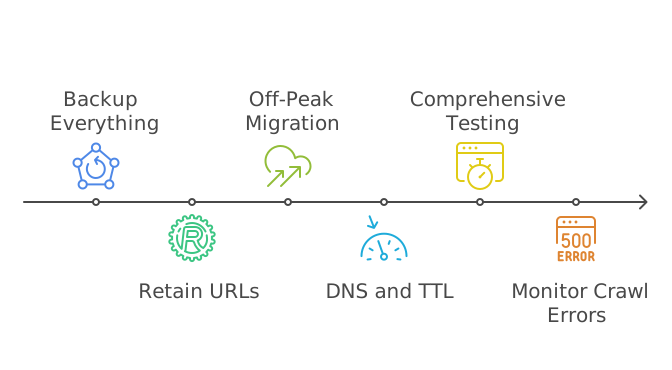
Backup Everything
Full site and database exports before making changes.
Retain URLs
Keep domain and URL structure intact; if changes are unavoidable, implement 301 redirects.
Off‑Peak Migration
Move during low‑traffic windows; use a temporary maintenance page if needed.
DNS and TTL
Lower TTL beforehand to speed up DNS propagation; update A records to your new server.
Comprehensive Testing
Verify page load times, forms, e‑commerce flows, mobile responsiveness, and SEO elements (sitemaps, robots.txt).
Monitor Crawl Errors
Use Google Search Console to detect and resolve 404s or other issues promptly.
John Mueller of Google confirms that crawl rates may dip briefly post‑migration, but once stability is verified, Google restores normal crawl frequency.
Is Your Business Ensuring Peak Website Performance and Security?
Stay ahead of the curve with comprehensive website maintenance and support services that keep your site updated, secure, and running smoothly. From routine updates and performance optimisation to proactive troubleshooting, we ensure your website works as hard as you do.
Your web host isn’t just a digital landlord—it’s the engine behind every performance metric search engines love. From lightning‑fast load times and rock‑solid uptime to airtight security and seamless scalability, hosting underpins your SEO success. If your content strategy is impeccable but rankings remain stagnant, your hosting choice might be the missing piece.
Invest in an SEO‑optimized host—backed by robust speed, reliability, security, and expert support—and you’ll lay an unshakeable foundation for higher rankings, better user experiences, and sustainable growth. Because no matter how great your content, it needs a great host to truly shine.
Choose wisely, monitor consistently, and watch your search visibility soar!
Boost your Google rankings, accelerate page loads, and safeguard your site with a hosting solution built to amplify SEO performance. Discover how the right web host can transform your site’s visibility, user experience, and organic traffic growth.

Frequently Asked Questions
What is the role of web hosting in SEO?
Web hosting underpins core SEO factors—page speed, uptime, security, and server location—that influence how search engines crawl, index, and rank your site. Choosing an SEO‑friendly host ensures optimal performance and reliability.
How does server speed affect Google rankings?
Faster servers reduce page‑load times, improving user experience and meeting Google’s Core Web Vitals metrics. Sites that load quickly are more likely to rank higher and keep visitors engaged.
Why is uptime important for SEO?
Consistent uptime prevents downtime‑induced crawl errors and lost traffic. Search engines may de‑index or down‑rank sites that frequently go offline, so reliability is crucial for maintaining rankings.
Should I choose shared or dedicated hosting for SEO?
Shared hosting can be cost‑effective for small sites but may suffer performance dips under load. Dedicated, VPS, or cloud plans offer dedicated resources and scalability, delivering more consistent SEO benefits.
How does server location impact local SEO?
Hosting in or near your target region reduces latency for local users and signals geographic relevance to search engines. For broader reach, pairing local servers with a global CDN ensures fast load times worldwide.