





Managed Cloud Hosting as a Growth Enabler in 2026
Cloud infrastructure is no longer a background IT consideration.
It is a direct contributor to digital performance, customer experience, and revenue outcomes. As websites, applications, and marketing platforms become more tightly coupled with AI-led search, real-time personalisation, and always-on user expectations, the reliability and performance of your cloud environment directly affect business growth.
At the same time, cloud environments have grown more complex. Businesses now operate across multiple platforms, services, and integrations that must work seamlessly to support speed, uptime, security, and scalability. For leadership teams, this creates a critical challenge: cloud decisions increasingly influence marketing effectiveness, SEO visibility, conversion rates, and operational continuity, yet managing that complexity internally diverts focus away from growth priorities.
This is where managed cloud hosting becomes a strategic advantage. Rather than managing infrastructure in isolation, managed cloud hosting provides ongoing performance optimisation, proactive monitoring, security oversight, and scalability management, ensuring that digital platforms remain fast, resilient, and growth-ready without placing operational strain on internal teams.
In this guide, we explore how managed cloud hosting supports business growth in 2026; not as a technical upgrade, but as a foundational layer for digital performance, reliability, and long-term scalability.
Understanding Managed Cloud Hosting in the 2026 Context
What is Managed Cloud Hosting?
Managed cloud hosting is less about “where your servers live” and more about how reliably your digital operations perform at scale.
It refers to a service model where a specialist provider takes ongoing responsibility for the stability, security, performance, and scalability of your cloud environment, allowing internal teams to focus on growth, not infrastructure oversight.
Rather than managing cloud platforms in isolation, managed cloud hosting ensures that the systems powering your website, applications, data platforms, and marketing tools are continuously optimised, monitored, and supported. This is especially critical as cloud environments increasingly underpin customer experience, search visibility, conversion performance, and operational continuity.
Managed cloud services typically span multiple layers of the cloud stack, each supporting different business outcomes:
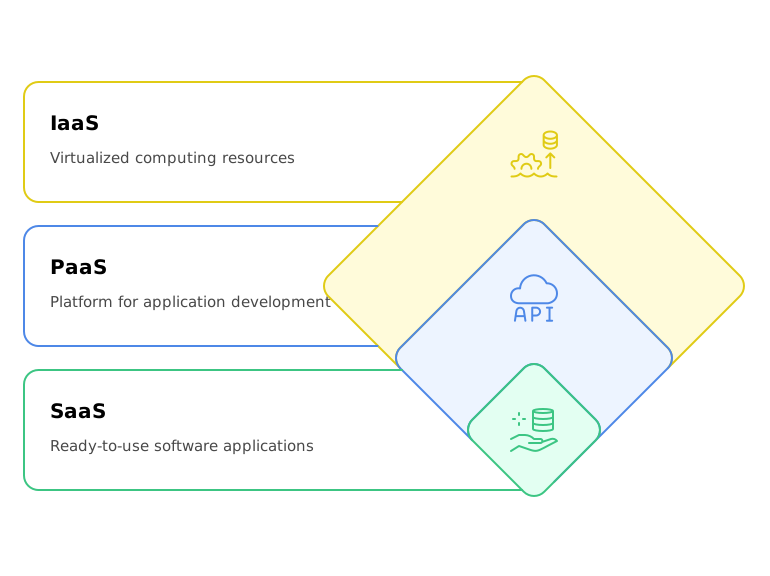
Infrastructure as a Service (IaaS)
At this layer, managed cloud hosting ensures that core computing resources such as servers, storage, and networking remain resilient, secure, and performant as demand fluctuates.
For businesses, this translates into reliable uptime, faster load times, and the ability to scale without disruption.
Platform as a Service (PaaS)
PaaS removes operational friction from the platforms that support applications, integrations, and data workflows.
In a managed context, this layer focuses on performance optimisation, environment stability, and proactive issue resolution, ensuring that digital products and internal systems remain responsive as complexity increases.
Software as a Service (SaaS)
At the application level, managed cloud hosting supports the performance and reliability of the tools businesses depend on daily, from CMS platforms and CRM systems to analytics, marketing automation, and customer portals.
The emphasis here is on availability, security, and seamless integration rather than software maintenance itself.
Across all three layers, the value of managed cloud hosting in 2026 lies in reducing operational risk while improving digital performance. As cloud environments become more interconnected with revenue, marketing, and customer experience, managed services provide the consistency and oversight required to support sustainable business growth.

Why Managed Cloud Hosting Directly Impacts Performance, SEO & Conversions
In 2026, managed cloud hosting is a growth-critical business lever.
Website performance, search visibility, and conversion outcomes are now directly shaped by how well cloud environments are optimised, monitored, and maintained in real time.
As search engines, AI discovery systems, and users themselves become less tolerant of slow, unstable, or inconsistent digital experiences, infrastructure performance increasingly determines whether a business is found, trusted, or chosen.
Performance Is Now a Revenue Signal
Speed and reliability are no longer technical metrics; they are commercial ones.
Page load delays, intermittent downtime, or inconsistent performance across regions directly erode engagement and conversion rates.
Managed cloud hosting ensures that performance is proactively optimised through continuous monitoring, traffic handling, and resource tuning. This reduces friction across critical touchpoints such as landing pages, checkout flows, lead forms, and content-heavy experiences where even minor degradation can have a measurable revenue impact.
SEO Visibility Depends on Infrastructure Stability
Search visibility in 2026 is shaped by more than content quality alone.
Core Web Vitals, uptime consistency, and server responsiveness all influence how pages are ranked, surfaced, and cited, particularly within AI Overviews and zero-click search environments.
Managed cloud hosting supports SEO by maintaining:
- Consistent response times during traffic spikes
- Stable crawl accessibility for search engines
- Fast, reliable delivery across devices and locations
As search journeys become shorter and more AI-mediated, businesses with unstable infrastructure risk being excluded from visibility altogether, regardless of content strength.
Conversion Performance Relies on Trust Signals
Users now form trust judgments in milliseconds.
Slow-loading pages, broken experiences, or inconsistent performance subtly undermine credibility before messaging is even processed.
Managed cloud hosting protects conversion performance by ensuring:
- High availability during peak demand
- Secure, uninterrupted user journeys
- Predictable performance across marketing campaigns and launches
In this context, hosting becomes part of the conversion funnel itself, influencing whether users complete actions, return, or disengage entirely.
Why This Matters in 2026
As digital ecosystems become more interconnected spanning SEO, paid media, AI discovery, analytics, and customer experience, infrastructure can no longer be treated as a background concern. Managed cloud hosting provides the operational foundation that allows performance, visibility, and conversion strategies to actually succeed.
In 2026, growth is not just driven by better campaigns or smarter content; it is sustained by infrastructure that does not become the bottleneck.
Managed Cloud Hosting Trends Driving Business Growth in 2026
Managed cloud hosting trends are no longer driven by infrastructure innovation alone.
They are shaped by how cloud environments support performance, security, compliance, sustainability, and AI-enabled growth across the entire digital ecosystem.
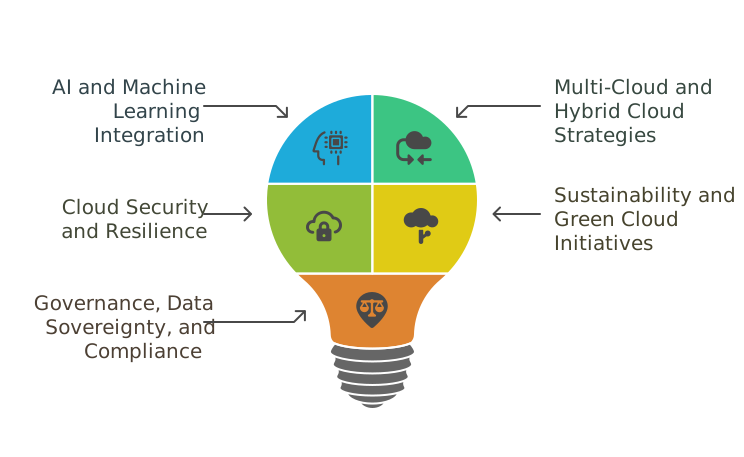
How These Trends Translate Into Real Business Impact
AI and Machine Learning Integration → Performance & Predictive Optimisation
AI within managed cloud hosting is less about experimentation and more about predictive optimisation.
AI-driven monitoring enables proactive performance tuning, anomaly detection, and traffic forecasting; reducing downtime, stabilising user experience, and protecting revenue during demand spikes.
For businesses, this means fewer performance surprises and more predictable digital outcomes.
Multi-Cloud and Hybrid Cloud Strategies → Risk Mitigation & Flexibility
Multi-cloud is no longer adopted for innovation; it’s adopted to avoid dependency risk.
Managed cloud providers now help businesses balance performance, cost, and compliance across environments without operational complexity leaking into marketing, sales, or product teams.
This flexibility protects growth initiatives from vendor lock-in and regional disruption.
Cloud Security and Resilience → Trust, Compliance & Conversion Protection
Security in 2026 is inseparable from brand trust.
Managed cloud hosting plays a direct role in protecting customer data, ensuring uptime, and meeting regulatory expectations, all of which influence user confidence and conversion behaviour.
A resilient cloud environment reduces both operational risk and reputational exposure.
Governance, Data Sovereignty, and Compliance → Market Access & Scalability
As regulations tighten across regions, managed cloud hosting enables businesses to scale without compliance becoming a blocker. Governance frameworks, regional data controls, and audit readiness are now prerequisites for expansion, not afterthoughts.
This allows businesses to enter new markets faster and with lower legal risk.
Sustainability and Green Cloud Initiatives → Efficiency, Cost Control & Brand Alignment
In 2026, sustainability in cloud hosting is driven by efficiency, not optics.
Optimised resource usage reduces waste, lowers operating costs, and aligns infrastructure decisions with ESG commitments that increasingly influence B2B procurement.
Managed providers help businesses achieve sustainability gains without sacrificing performance.
Together, these trends reflect a shift in how managed cloud hosting is evaluated as a foundational layer for digital performance, visibility, and long-term growth.
Is Your Business Ready for Seamless, Scalable Cloud Web Hosting?
Empower your online presence with robust cloud hosting that ensures speed, security, and effortless scalability. From lightning-fast load times to built-in redundancy and 24/7 support, keep your website performing at its peak—no matter how fast you grow.
Why Managed Cloud Hosting Is a Growth Lever in 2026
Managed cloud hosting in 2026 is no longer justified by operational convenience alone.
It is increasingly evaluated based on how directly it supports business performance, digital visibility, and scalability without friction.
As organisations depend more heavily on always-on digital experiences; from websites and platforms to data-driven marketing and AI-enabled workflows, cloud reliability, speed, and governance directly influence growth outcomes.
Below are the reasons managed cloud hosting has shifted from a technical decision to a strategic one.
Reducing Risk as Digital Dependency Increases
In 2026, downtime, latency, or security incidents don’t just disrupt operations; they interrupt demand generation, damage trust, and stall conversions.
Managed cloud hosting reduces this exposure by providing proactive monitoring, resilience planning, and rapid issue resolution.
For growth-focused teams, this translates into fewer disruptions across marketing, sales, and customer experience touchpoints.
Turning Cost Control Into Predictable Scaling
Cloud cost volatility remains a concern, but the conversation has evolved beyond “saving money.”
What businesses now need is predictability.
Managed providers help align infrastructure spend with actual usage and growth phases, ensuring performance is maintained as traffic, data, and workloads scale. This prevents under-provisioning during growth surges and waste during quieter cycles, both of which directly affect ROI.
Simplifying Complexity Without Slowing Execution
Multi-cloud and hybrid environments are now common, but complexity should not leak into execution speed.
Managed cloud hosting abstracts this complexity away from internal teams, allowing digital, marketing, and product functions to move faster without being constrained by infrastructure decisions. This separation is critical for organisations competing on speed and adaptability.
Protecting Focus on What Actually Drives Growth
Perhaps the most underestimated benefit is focus.
By removing the operational burden of infrastructure oversight, businesses protect internal capacity for higher-value work, improving digital experiences, launching new initiatives, and optimising performance across channels.
In a market where attention, speed, and reliability define competitive advantage, managed cloud hosting becomes a silent but decisive growth enabler.

Suggested reading:
Redefining Digital Protection: Managed Cloud Hosting Improves Website Security and Performance
Choosing a Managed Cloud Partner That Supports Business Growth
In 2026, selecting a managed cloud hosting provider is no longer a purely technical decision.
It is a commercial one.
Hosting performance directly influences search visibility, user experience, conversion rates, and the ability to scale digital initiatives without friction.
The right managed cloud partner should not only keep infrastructure stable, but actively support growth objectives across marketing, product, and revenue teams.
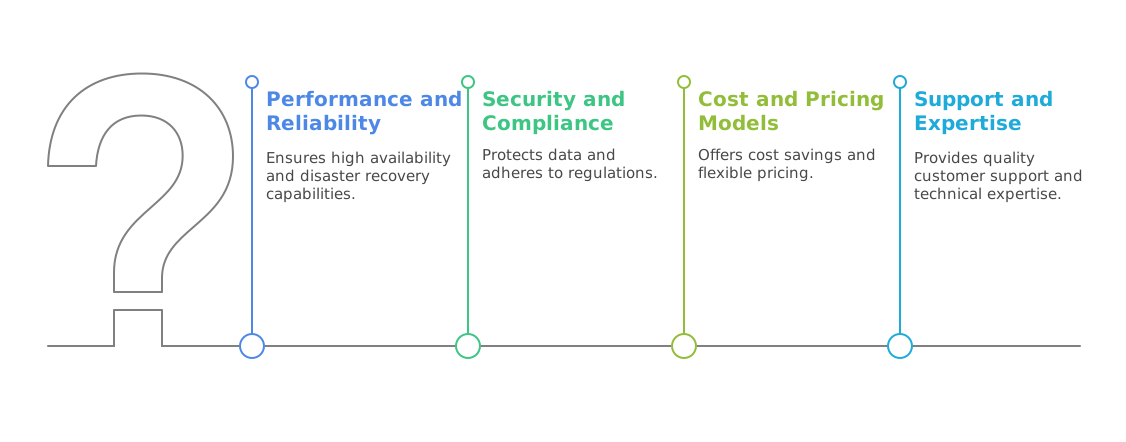
Performance and Reliability
Performance in 2026 is measured by impact, not uptime percentages alone.
Page speed, latency, and stability directly influence Core Web Vitals, search visibility, and conversion performance.
A strong managed cloud provider should proactively optimise performance under real traffic conditions, ensuring your site remains fast during peak demand, campaigns, and growth phases and not just technically “available.”
Security and Compliance
Security is now inseparable from trust, compliance, and brand credibility.
Managed cloud providers must protect not only infrastructure, but customer data, analytics pipelines, and integrated marketing systems.
In 2026, this means continuous security monitoring, compliance readiness, and resilience against disruption, enabling businesses to scale digital operations without exposing risk that can damage reputation or revenue.
Cost and Pricing Models
Cost management in the cloud is about predictability and optimisation, not simply lower spend.
Poorly managed cloud environments introduce hidden costs through inefficiencies, overprovisioning, and performance bottlenecks.
A growth-focused managed provider should actively align cloud spend with business outcomes, ensuring resources scale in line with demand while preventing waste that erodes ROI.
Support and Expertise
Support in 2026 must be proactive, not reactive.
Businesses need access to specialists who understand how infrastructure decisions affect digital performance, SEO, and customer experience, not just server health.
The right managed cloud partner acts as an extension of your internal teams, helping anticipate issues, guide optimisation decisions, and support growth initiatives without operational drag.
Why Managed Hosting Replaces Traditional Hosting Models
Traditional hosting models struggle to support modern digital demands; from AI-driven search visibility to real-time personalisation and traffic volatility. Managed cloud hosting replaces static infrastructure with environments designed for adaptability, performance, and continuous optimisation.
For B2B organisations, this shift enables faster experimentation, more reliable digital experiences, and infrastructure that supports growth rather than constrains it.
Is Your Business Ensuring Peak Website Performance and Security?
Stay ahead of the curve with comprehensive website maintenance and support services that keep your site updated, secure, and running smoothly. From routine updates and performance optimisation to proactive troubleshooting, we ensure your website works as hard as you do.
How Businesses Should Work With Managed Cloud Partners in 2026
Even with a managed cloud partner in place, long-term success depends on how well businesses align ownership, priorities, and decision-making. In 2026, managed cloud hosting works best when it is treated as a strategic partnership, not a full handoff of responsibility.
This alignment ensures cloud environments actively support performance, growth, and risk management rather than becoming passive infrastructure.
Maintain Shared Ownership of Risk and Compliance
Security in 2026 extends beyond infrastructure hardening.
While managed providers handle platform-level protection, businesses remain accountable for governance, access control, and compliance decisions that affect data, customers, and brand trust.
Clear ownership models, regular risk reviews, and alignment between internal teams and cloud partners are essential to maintaining resilience at scale.
Align Cloud Spend With Business Outcomes
Cloud cost management is about ensuring spend supports growth.
Even with managed services, businesses must actively review how infrastructure investment maps to demand, performance, and revenue-driving activity.
The most effective organisations treat FinOps as a strategic discipline, using their managed provider to continuously optimise cost efficiency without sacrificing speed or reliability.
Define Clear Commercial Priorities for Cloud Performance
Managed cloud services deliver the most value when they are guided by clear business objectives.
Performance requirements, scalability expectations, and risk tolerance should be explicitly defined and not assumed.
When cloud strategy is aligned with marketing, product, and growth goals, managed services move from operational support to a competitive enabler.
Know Where Your Provider Creates Strategic Value
In 2026, the difference between managed cloud providers lies in how they support business evolution.
Beyond service inclusions, businesses should understand where their provider offers proactive optimisation, advisory input, and performance insights.
Clarity here ensures the partnership delivers continuous improvement, not just ongoing maintenance.
The Future of Managed Cloud Hosting Is Business-Led, Not Infrastructure-Led
By 2026, managed cloud hosting will no longer be defined by access to technology.
It will be defined by how effectively that technology supports growth, performance, and resilience.
As digital experiences become more demanding and customer expectations continue to rise, businesses can no longer afford cloud environments that simply “run.”
Cloud infrastructure must actively enable faster sites, stable platforms under peak demand, and the flexibility to scale without friction. This is where managed cloud hosting delivers its greatest value.
AI-driven optimisation, automation, and predictive monitoring are already reshaping how cloud environments are managed, but the competitive advantage lies in how these capabilities are applied.
Businesses that treat managed cloud hosting as a strategic partnership gain clearer visibility into performance bottlenecks, cost efficiency, and scalability opportunities, turning infrastructure into a growth asset rather than a background cost.
At the same time, complexity is not decreasing.
Multi-cloud architectures, compliance pressures, and performance expectations will continue to intensify.
Organisations that rely on reactive, hands-off hosting models risk slower time-to-market, inconsistent performance, and missed revenue opportunities.
Businesses that align managed cloud decisions with commercial priorities, where uptime protects conversions, scalability supports growth campaigns, and performance underpins SEO and customer experience, will have better potential to be future-proofed.
In this environment, managed cloud hosting is now considered a part of a business’s operational strategy.
Managed cloud hosting directly impacts performance, SEO visibility, and conversion stability. If your infrastructure isn’t optimised for speed, reliability, and scale, it becomes a growth constraint.
We help businesses assess whether their cloud environment is built to support measurable outcomes, not just uptime.


