




Your website isn’t just a virtual presence anymore; it’s your business’s front door, marketing engine, and often, the business itself. In the digital space, where cyber threats are on the rise and user expectations for speed and availability are higher than ever, making your website secure and keeping it running reliably is increasingly challenging.
Traditional hosting methods can sometimes lead to continuous downtime, slow loading times, and significant security weaknesses. The solution lies in the powerful synergy of managed hosting and cloud hosting. Managed hosting provides expert care, proactive monitoring, robust security features, and top-tier performance, while cloud hosting offers unparalleled flexibility, scalability, and reliability.
Let’s how combining managed services with cloud infrastructure creates managed cloud hosting and specifically enhances your website’s security posture while boosting its performance and uptime, fundamentally redefining digital protection.
Understanding the Foundations: Managed Hosting vs. Cloud Hosting
Before diving into the combined power, let’s briefly look at all the components that add up to building that foundation.
What is Traditional Hosting ?
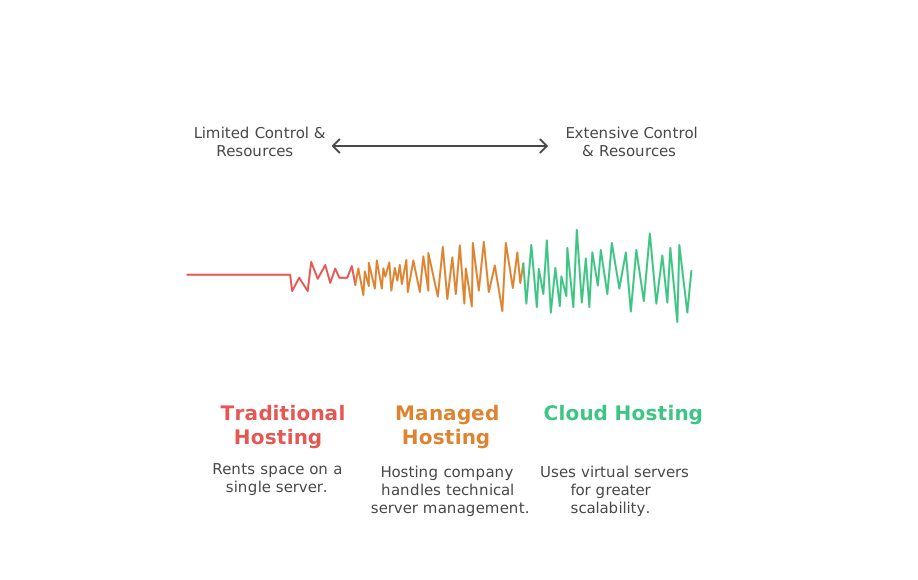
Traditional hosting typically involves renting space on a single physical server. This can be in shared, dedicated, or Virtual Private Server (VPS) environments. Limitations include restricted scalability and reliance on a single point of failure, often requiring significant technical management from the user.
What is Managed Hosting ?
Managed hosting is a service where the hosting company handles the technical work of operating and maintaining your web server. This includes the management of the operating system, hardware, security patches, backups, and monitoring. It’s particularly beneficial for companies that may lack extensive in-house IT staff. Managed hosting services make security a primary focus from the outset.
What is Cloud Hosting ?
Cloud hosting makes websites and applications available using the cloud, residing on virtual servers spread throughout a network. It pools computing resources from virtual and physical servers, allowing for greater scalability and flexibility to quickly make changes. Cloud hosting often uses a pay-as-you-go model, meaning you typically pay only for the resources consumed. It offers better performance, reliability, and speed than traditional or VPS hosting due to its distributed infrastructure.
The Power of Managed Cloud Hosting
Managed cloud hosting combines the expert oversight and proactive management of managed hosting with the scalable, flexible, and resilient infrastructure of cloud hosting.
This provides users with seamless experiences, enhanced security, and cutting-edge tools.

Managed Cloud Hosting: Fortifying Your Website's Security
Security is no longer an amenity; it’s an essential. Managed hosting services are designed with security as a topmost purpose, employing multiple layers to guard web assets.
Here’s how managed cloud hosting enhances your site’s security:
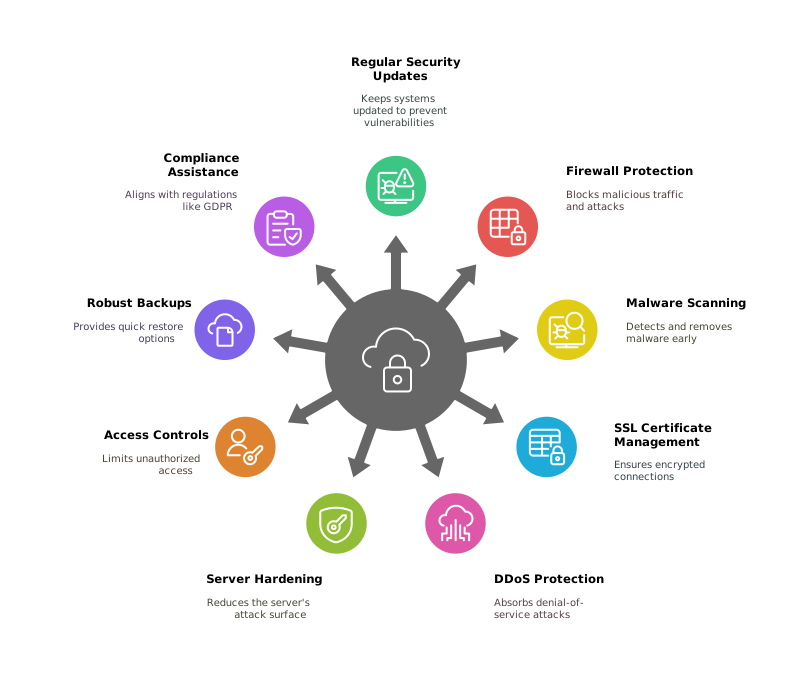
Regular Security Patches & Updates
Managed hosting services automatically keep the server operating system, CMS (like WordPress), and plugins up-to-date. This is crucial for mitigating vulnerabilities that hackers often exploit.
Firewall Protection
Managed hosting includes firewalls. Cloud security layers also include firewalls, such as Web Application Firewalls (WAFs) that block malicious traffic and known attacks before they reach your site. Google Cloud offers Cloud Armor for web and DDoS protection.
Malware Scanning & Removal
Automatic scanning helps prevent and remove malware early.
SSL Certificate Management
Ensures connections are always encrypted. This often includes managed renewals and setups. SSL is a standard cloud hosting security layer.
DDoS Protection
Systems are in place to absorb distributed denial-of-service attacks that could take your site offline. Google Cloud offers Cloud Armor for this purpose.
Server Hardening
A security process that reduces the server’s attack surface. Managed providers achieve this by turning off unnecessary services, limiting user permissions, enforcing secure protocols, and customizing firewall rules, making installations significantly safer than default setups.
Access Controls
Security measures include access controls to guard sensitive areas and limit unauthorised access, particularly in team environments. Managed hosting security often involves identity management and access control.
Robust Backups and Disaster Recovery
Even with strong security, incidents can occur. Managed providers offer automatic, robust backups. These can be daily or real-time backups, often stored off-site. Quick restore options allow sites to be rolled back in minutes. This includes pre-built disaster recovery plans to minimise downtime. Cloud hosting itself provides robust data backup and disaster recovery capabilities. This preparedness enormously minimizes downtime, even during worst-case scenarios, and offers business continuity.
Compliance Assistance
Providers can assist with aligning your site to regulations like GDPR, HIPAA, and PCI-DSS. This can involve offering compliance-ready infrastructure, encrypted data storage/transmission, vulnerability scanning, and audit trails. Aligning your site with these laws helps minimize legal exposure and instill confidence among your stakeholders and users.
Is Your Business Ready to Scale Without Limits in 2025?
Empower your growth with scalable hosting services designed to adapt to your evolving needs. Maximize uptime, boost performance, and future-proof your infrastructure with solutions built for agility and resilience.
Managed Cloud Hosting: Boosting Performance and Uptime
Beyond security, performance and availability are paramount for a positive user experience and business success. Managed cloud hosting aims for 24/7 uptime, achieved through a balance of high-availability architecture and preventive monitoring. Cloud hosting inherently provides great reliability and uptime due to its distributed nature.
Here’s how performance and availability are enhanced:
Load Balancing
Traffic is distributed across multiple servers, preventing any single server from becoming a point of failure or bottleneck. Google Cloud offers Cloud Load Balancing.
Auto-Scaling
Resources are provisioned automatically during traffic peaks, avoiding crashes or slowdowns due to resource starvation. Cloud hosting easily scales resources based on demand. Serverless platforms, like Google Cloud Run, scale automatically.
Geographically Distributed Data Centers
If one data center fails, another automatically takes over, ensuring resilience. Cloud hosting spreads servers across different regions.

24/7 Monitoring
Hosting teams continuously check performance and availability around the clock, resolving issues often before users even notice. Real-time monitoring is a key feature of managed services.
Faster Loading Speeds
Cloud hosting provides better performance with servers in different regions delivering content faster to users.
Edge Computing Integration
Bringing computation and data storage closer to end users reduces latency and improves loading times. This marks a “paradigm shift” in web hosting dynamics. This is often leveraged by CDNs (Content Delivery Networks) to serve content with optimal performance and minimum latency.
Integration with Advanced Technologies
Managed WordPress hosting, for example, seamlessly integrates with caching mechanisms, CDNs, and scalability solutions for faster loading times and improved user experiences.

Suggested reading:
Managed Hosting vs. DIY Solutions: Why Cloud Performance Optimization Matters for Business Growth
The Strategic Advantages of Managed Cloud Hosting
Choosing managed cloud hosting offers significant strategic benefits for businesses:
Cost-Effectiveness
While initial costs might be higher than basic shared hosting, it can be cost-effective in the long run. It reduces the need for extensive in-house technical expertise or additional tools, lowering operational expenses. The pay-as-you-go cloud model also helps manage costs by only paying for consumed resources.

Flexibility and Scalability
Cloud hosting offers unparalleled flexibility to adjust resources instantly based on needs. It scales seamlessly to handle traffic spikes.
Expert Support
You gain access to a dedicated team of experts highly skilled in protecting and maintaining your site 24/7. They are available around the clock to resolve technical issues swiftly.
Time Savings
Managed cloud hosting offloads technical complexities like server operation, security, backups, and monitoring. This allows businesses to focus on their core operations and growth rather than technical maintenance.
Eco-Friendliness
Cloud providers are increasingly focused on sustainability, utilising energy-efficient hardware, optimized resource allocation, and investments in renewable energy sources. Google Cloud is highlighted as a sustainable cloud provider.
Keep Your Website Running at Peak Performance with Expert Maintenance & Support
Ensure uninterrupted uptime, fast load speeds, and bulletproof security with dedicated website maintenance and support services. From routine updates to rapid issue resolution, give your digital presence the care it needs to perform at its best—every day.
The Future Edge: AI and Agentic AI in Hosting and Security
The digital landscape is constantly evolving, and future advancements will likely be integrated into managed cloud hosting offerings.
AI in Hosting
Artificial Intelligence (AI) tools are already being integrated into the WordPress ecosystem and cognitive hosting platforms for automation, content improvement, and resource allocation. AI is becoming an indispensable part of modern WordPress development.
AI in Cybersecurity
AI is used to improve threat intelligence through contextual searches across large datasets.
Agentic AI (Emerging)
Agentic AI represents a significant leap in cybersecurity. Agentic systems can accelerate the entire security workflow, from analyzing alerts and gathering context to reasoning about root causes and acting on findings—all in real time. They can potentially significantly reduce response times.
Considerations
It’s noted that AI, particularly Agentic AI, expands the attack surface, highlighting the continued need for secure infrastructure and governance. The cybersecurity landscape is evolving into an “AI vs. AI” battlefield. Managed cloud hosting providers will likely integrate these AI advancements to further enhance automated security and performance optimization.
Is Managed Cloud Hosting Right for You?
Managed hosting is particularly beneficial for companies that lack in-house IT staff. It provides enterprise-grade security and support that can be valuable even for small businesses. If your business needs reliable performance, strong security, and scalability without the burden of technical management, managed cloud hosting is likely the ideal solution.
In a fast-paced, risk-filled online world, uptime and web security are no longer amenities; they’re essentials. Managed cloud hosting is a strategic solution that fundamentally redefines digital protection. It significantly enhances website security and performance by combining expert management with resilient cloud infrastructure. This powerful combination addresses the critical challenges of maintaining uptime and defending against escalating cyber threats.
Investing in managed cloud hosting means gaining a dedicated team of experts and a robust, reliable infrastructure to protect, maintain, and keep your site accessible twenty-four hours a day.
By leveraging managed cloud hosting, businesses can ensure their web presence stays robust, resilient, secure, and future-ready daily.
Secure your website, boost performance, and focus on growth with a tailored solution designed to keep your business safe and lightning-fast.


