




Downtime isn’t just inconvenient—it’s costly. Businesses lose thousands when websites fail during high-traffic moments, from viral campaigns to seasonal surges. The true cost is not hosting fees but missed opportunities, lost customers, and diminished trust.
Managed hosting helps businesses stay online by turning these spikes into strategic advantages. Modern infrastructure scales automatically, maintains performance, and ensures your digital presence never falters when it matters most.
Let’s explore how businesses convert peak traffic into measurable growth through autoscaling, capacity planning, and uptime optimization, with real-world examples showing viral campaigns generating $150,000+ and revenue growth from $3M to $50M. Proactive hosting is no longer just IT—it’s a core component of business resilience and competitive strategy.
The Hidden Cost of Downtime: Peak Traffic Can Make or Break Revenue
When sites crash during traffic spikes, losses go beyond immediate sales. Marketing spend evaporates, SEO rankings drop, and competitors capture audiences permanently. Every dollar spent acquiring traffic can be wasted, and long-term customer trust erodes.
Only 26% of businesses are satisfied with their managed hosting providers, leaving most stuck with infrastructure that limits growth. Slow load times hurt Core Web Vitals, reduce organic visibility, and decrease customer lifetime value.
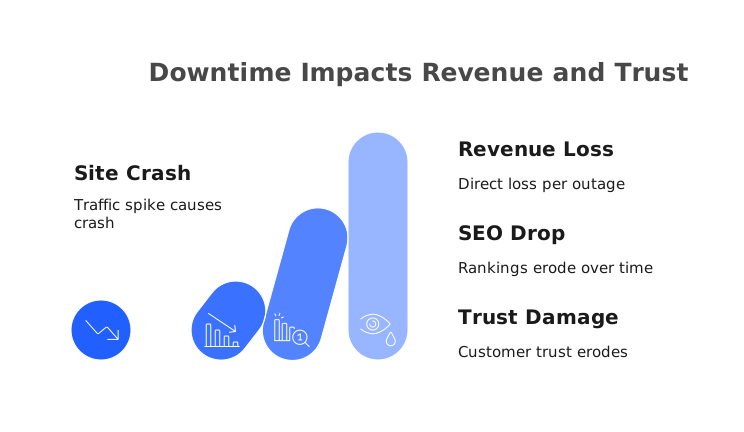
Competitive Disadvantage: During Black Friday or viral campaigns, an unavailable site means lost revenue and market share. Competitors with robust hosting capture frustrated users who often become loyal customers.
Direct Revenue Loss: If an e-commerce site generating $500K annually experiences 2 hours of downtime during peak events, that’s approximately $6,840 lost per outage. Formula: (Hourly Revenue ÷ 60) × Minutes of Downtime = Direct Loss. High-value moments can multiply these losses dramatically.
The Ripple Effect: Downtime erodes SEO rankings, wastes acquisition spend, and damages trust. Competitors with reliable hosting capture these visitors, turning them into long-term customers. Reliable infrastructure is now a strategic advantage.

Suggested reading:
Boost Your Bottom Line: How Web Hosting Uptime Impacts Business Revenue and Customer Trust
How Managed Hosting Transforms Peak Traffic From Threat to Growth
Managed hosting transforms spikes from risk to growth. Autoscaling, load balancing, and proactive monitoring maintain performance, turning traffic into revenue instead of downtime.
Businesses adopting hybrid and multicloud architectures move away from fixed-capacity hosting, aligning resources with real demand. The result: predictable performance, maximized conversions, and a competitive edge during high-traffic moments.
Marketing teams launch campaigns without IT bottlenecks. Product teams push major releases seamlessly. Sales teams run promotions confidently. Operational freedom translates directly into revenue growth.

Real-World Outcomes:
- EQ Applied: $150,000+ viral traffic success with zero downtime
- Hall: WooCommerce revenue growth from $3M to $50M
- HOSTING: 700+ enterprise migrations with improved scalability
These examples illustrate how infrastructure scalability can be a business enabler rather than a constraint.
Infrastructure Scalability: Autoscaling, Load Balancing, and Containers
Modern hosting relies on automation:
- Autoscaling: Adds server instances automatically when thresholds (CPU, memory, requests) are reached.
- Load Balancing: Distributes traffic evenly to prevent bottlenecks.
- CDN Integration: Serves cached content from edge locations, reducing latency.
- Container-Based Deployments: Kubernetes and Docker launch containers in seconds, enabling rapid scaling.
Multi-cloud management ensures redundancy, flexibility, and consistent uptime—core elements of future-ready infrastructure.
Proactive Monitoring and 24/7 Expert Support
Prevention beats reaction.
Managed hosting continuously monitors server load, response times, and errors to detect issues early. 24/7 expert support manages autoscaling, load balancer health, and security anomalies in real time, ensuring sites remain fast, stable, and secure.
Performance Optimization: Speed, Caching, and CDN Integration
Speed drives user experience and SEO.
NVMe storage, multi-layer caching, and CDNs deliver sub-second load times even under heavy traffic. Server-side caching reduces database strain, while edge CDNs protect origin servers. Faster load times lead to higher conversions and stronger search rankings.
Is Your Website Ready to Scale?
Power your growth with scalable web hosting that expands seamlessly as traffic and demands rise. From sudden surges to long-term growth, enjoy consistent performance, built-in resilience, and expert support—so your website never holds your business back.
Real-World ROI: How Managed Hosting Turns Peak Traffic Into Revenue Growth
Numbers speak louder than theory and these businesses prove it. With the right hosting infrastructure, companies didn’t just stay online during peak demand. They grew revenue, improved reliability, and scaled confidently.
EQ Applied handled a viral traffic surge with zero downtime and turned it into $150,000+ in sales, showing how autoscaling, CDN integration, and database optimization directly translate to profit.
Hall scaled WooCommerce operations from $3M to $50M in revenue by eliminating performance bottlenecks and ensuring seamless uptime during seasonal peaks, a proof that managed hosting fuels long-term growth, not just short-term stability.
HOSTING migrated 700+ enterprise environments to Azure with better scalability and lower costs, demonstrating that the right infrastructure supports complex migrations without business disruption.
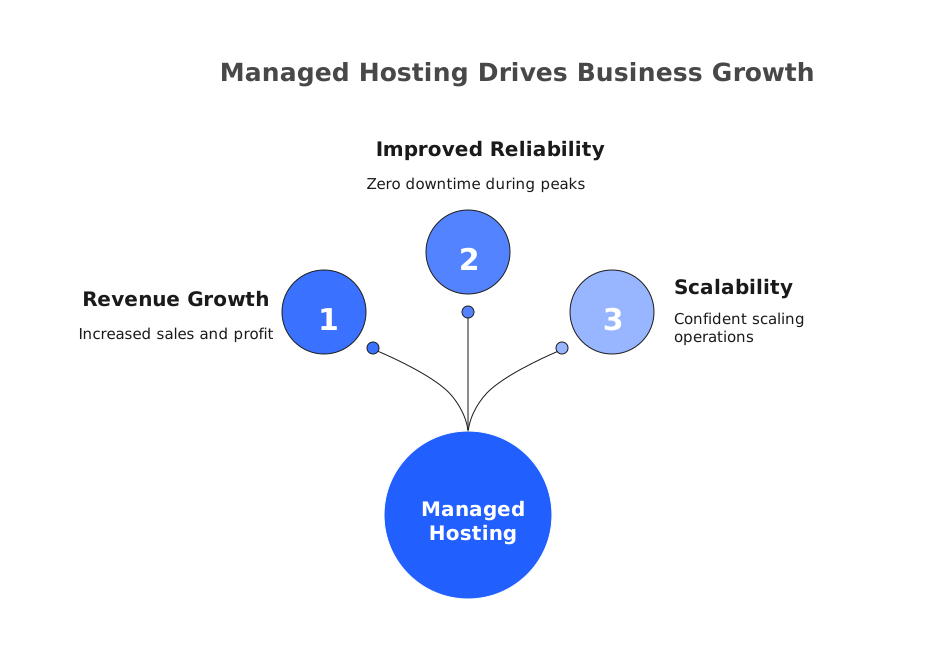
Across every case, the pattern is clear. Scalable, managed hosting transforms high traffic from a risk into an opportunity for measurable business growth.
Security, Compliance, and Business Continuity
Managed hosting transforms infrastructure into a competitive advantage:
- Automated Security Updates & Threat Detection: Protects against hacking, DDoS, and vulnerabilities
- Compliance Frameworks: HIPAA, PCI DSS, SOC 2 automated and audit-ready (DevOps Compliance Guide)
- Redundancy & Disaster Recovery: Multi-region backups and failover protect revenue during outages
This ensures security, compliance, and reliability are continuous, allowing focus on growth.

Suggested reading:
Managed Cloud Hosting Guide for SMEs: Essentials and Advantages To Know
The Capacity Planning Playbook: Preparing for Peak Traffic
Data-Driven Planning
Analyze historical traffic, growth trends, and performance metrics. Provision a 30–50% safety margin to prevent outages.
Autoscaling & Load Balancing Policies
Step or target tracking scales automatically without overspending. Cooldown periods and cost controls prevent volatility.
Stress Testing
Simulate real user behavior under gradual, sustained, and sudden spikes. Monitor response times, errors, resource utilization, and autoscaling.
ROI Measurement
Align capacity with business needs, turning infrastructure into a revenue enabler instead of a cost center.
From Cost Center to Competitive Advantage: Hosting as a Strategic Investment
Hosting is a business enabler. Infrastructure determines campaign conversions, seasonal spike revenue, and global user performance. Managed hosting investments drive growth, resilience, and competitive differentiation.
Peak traffic moments reveal the difference: your site scales while competitors fail, converting attention into revenue and market share. Compliance-ready infrastructure opens new markets, positioning hosting as a strategic tool.
Is Your Website Protected Against Downtime and Costs?
Keep revenue and trust intact with proactive maintenance. From updates and monitoring to optimisation and fast fixes, we ensure your site stays secure, reliable, and ready to perform.
Emerging Trends: Future-Proofing Managed Hosting for Peak Traffic
The hosting landscape is evolving rapidly. With 86% of enterprises planning multicloud portfolios within two years, flexibility and scalability are becoming essential for handling peak traffic effectively. Early adopters gain measurable competitive advantages.
AI-Driven Predictive Scaling
AI and machine learning now enable predictive autoscaling, identifying traffic spikes before they occur and preventing performance degradation. Continuous optimization—including query tuning, cache management, and resource allocation—ensures infrastructure improves automatically over time.
Edge Computing and Global Distribution
Processing at edge locations reduces latency from hundreds of milliseconds to under 20ms, improving user experience and conversion rates. Distributed traffic protects origin servers during spikes, ensuring high availability without over-provisioning.
Sustainable Hosting
Green data centers and carbon-neutral infrastructure cut operating costs, meet ESG requirements, and enhance brand reputation. Energy-efficient hardware and virtualization increase performance while reducing environmental impact.
These trends define the infrastructure that turns peak traffic from a risk into a growth opportunity.
Transform Peak Traffic Into Your Competitive Advantage
Peak traffic is your biggest revenue opportunity, but only if your infrastructure can handle it. Downtime is predictable when infrastructure falls short.
Managed hosting transforms infrastructure from constraint to enabler. Capacity planning, autoscaling, stress testing, and ROI frameworks allow confident handling of spikes. AI-driven optimization, edge computing, and sustainable infrastructure show where competitive advantage is heading.
Peak traffic doesn’t have to be a threat.
When managed correctly, it becomes a growth engine.
Make an informed decision for managed hosting solutions that align with your business goals. Secure performance, reduce downtime, and build customer trust with infrastructure designed for long-term growth.

Frequently Asked Questions
What’s the difference between managed hosting and shared hosting for high-traffic websites?
Shared hosting shares resources across many sites, causing slowdowns or outages during traffic spikes. Managed hosting provides dedicated, scalable resources, proactive monitoring, and expert optimization—ensuring high-traffic sites stay online reliably.
How much does website downtime cost my business?
Downtime isn’t just lost sales. Direct revenue loss = (Annual Revenue ÷ 8,760) × Downtime Hours × Peak Multiplier. The full impact includes wasted marketing spend, SEO damage, lost customer lifetime value, and brand reputation—often 3–5x the direct loss.
What infrastructure features handle traffic spikes effectively?
Key features include autoscaling (CPU, memory, request triggers), load balancing, CDN edge delivery, SSD/NVMe storage, multi-layer caching, 24/7 monitoring, and automated backups with geographic redundancy. Together, these maintain performance under peak loads.
How do I calculate ROI for managed hosting?
ROI (%) = (Revenue Protected + Operational Savings – Hosting Cost) ÷ Hosting Cost × 100. Consider prevented downtime and reduced IT management time. Typical ROI for high-traffic sites ranges from 300–800%.
Which compliance frameworks do managed hosting providers support?
Managed hosting supports HIPAA, PCI DSS, and SOC 2 with automated compliance, encryption, audit trails, access controls, and third-party certifications. For regulated industries, compliance-ready hosting is essential—not optional.