



In today’s fast-paced digital landscape, businesses are under constant pressure to release software quickly and efficiently. However, inconsistent software deployments can often lead to delays, errors, and inefficiencies that hinder productivity and growth. For organizations striving to stay competitive, the need for streamlined operations has never been more urgent.
DevOps automation in 2025 offers a powerful solution to these challenges by integrating automation into the software development and deployment process. By reducing the reliance on manual tasks, DevOps automation not only improves the speed of deployments but also ensures consistency and reliability. With automation tools in place, businesses can eliminate common deployment pitfalls, improve collaboration between development and operations teams, and accelerate time-to-market.
Let’s understand how adopting DevOps automation can transform your deployment processes, streamline operations, and help you achieve consistent, error-free releases. Whether you’re looking to enhance your existing processes or implement DevOps for the first time, this guide will help you unlock the full potential of DevOps automation in 2025.
Overcoming the Challenges of Traditional Software Deployments
Traditional software deployment methods, while effective in their time, often introduce significant challenges that hinder business agility. Many businesses still rely on manual processes that are error-prone, time-consuming, and lack consistency. These methods can cause delays in the deployment process, leading to missed deadlines, reduced product quality, and frustration for development and operations teams alike.
A key pain point is the human involvement required in each step of the deployment. From code integration to testing and deployment, manual actions create opportunities for mistakes and inconsistencies. This results in unpredictable release cycles and increased downtime during updates.
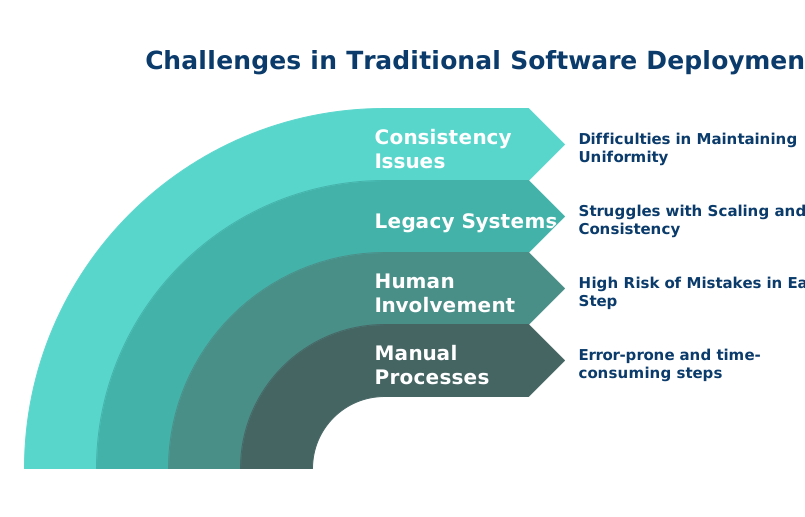
Furthermore, legacy systems often present additional deployment inefficiencies. These outdated infrastructures struggle to scale effectively with growing workloads and evolving software demands. As a result, maintaining consistency across environments becomes a complex and resource-draining task, slowing down the pace of innovation and making it difficult to respond to market changes quickly.
The inability to streamline deployment processes or maintain uniformity across environments not only affects productivity but also the quality of customer-facing applications. This is where DevOps automation in 2025 can offer a transformative solution.

Suggested reading:
Cloud Downtime Prevention: Minimize Business Risk with Managed Services to Ensure 24/7 Availability of Solutions for Business Operations
What is DevOps Automation and Why It’s Essential for 2025?
Defining DevOps Automation: The Role of Automation in DevOps
DevOps automation refers to the use of tools and processes to automate various stages of the software development lifecycle (SDLC), particularly in the deployment and operations phases. By automating repetitive tasks such as code integration, testing, deployment, and monitoring, businesses can significantly reduce human intervention, ensuring faster, more efficient, and consistent delivery of software.
In 2025, as companies strive for greater scalability and operational efficiency, adopting DevOps automation is not just a trend—it’s a necessity.
Benefits of DevOps Automation: Faster Deployment, Reduced Manual Errors, Enhanced Collaboration
The primary benefit of DevOps automation is the acceleration of deployment cycles. Automation allows for continuous integration and delivery (CI/CD), enabling businesses to deploy updates and new features more frequently and with higher quality.
By eliminating manual tasks, DevOps automation also reduces the risk of human errors, leading to more stable and reliable releases.
Moreover, automation fosters better collaboration between development and operations teams, aligning both departments toward shared goals and improving overall productivity.

Key DevOps Automation Strategies for Streamlining Software Deployments
Continuous Integration and Continuous Deployment (CI/CD): Faster Release Cycles
One of the most powerful strategies for streamlining software deployments is adopting Continuous Integration and Continuous Deployment (CI/CD). With CI/CD, developers can automatically integrate code changes into a shared repository multiple times a day. This ensures that new features and bug fixes are continuously tested and deployed, enabling faster release cycles and more frequent software updates.
By automating the entire process—from code commit to deployment—businesses can reduce delays, improve time-to-market, and provide customers with quicker access to new features and improvements.
Automated Testing and Monitoring: Ensuring Quality and Reliability
Automated testing and monitoring are critical components of successful DevOps automation. By incorporating automated testing into the CI/CD pipeline, businesses can ensure that every code change is thoroughly tested before being deployed to production. This minimizes the risk of introducing defects and guarantees that only high-quality software makes it to the end users.
Additionally, automated monitoring tools continuously track software performance post-deployment, identifying potential issues early and enabling rapid responses. These practices not only improve the quality of the software but also reduce downtime and improve overall system reliability.
Infrastructure as Code (IaC): Consistent Environments and Faster Rollbacks
Infrastructure as Code (IaC) is another key strategy that leverages automation to manage IT infrastructure. By using code to define and provision infrastructure, businesses can ensure that their development, staging, and production environments are consistent across the board.
IaC also allows for faster rollbacks in case of deployment failures, minimizing disruptions to the business and improving operational stability.
Is Your Business Ready for Seamless DevOps in 2025?
Unlock operational efficiency and accelerate development with tailored DevOps solutions. Enhance collaboration, optimize workflows, and scale with confidence.
Implementing DevOps Automation in Your Organization
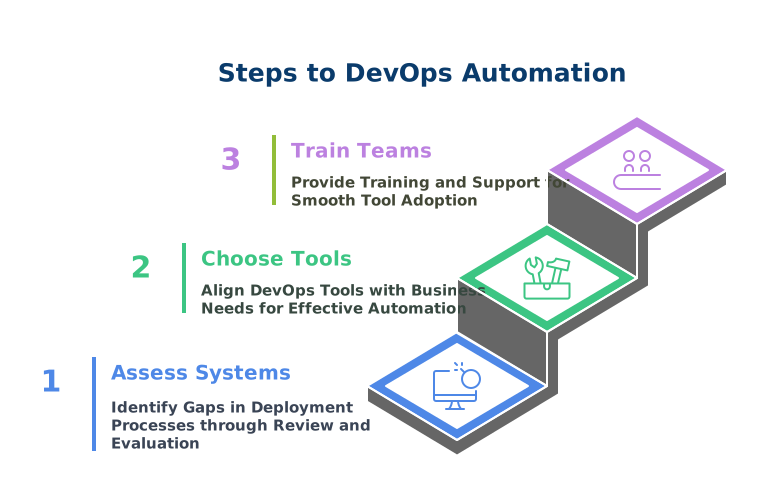
Step 1: Assessing Current Systems: Identify Gaps in Your Deployment Process
The first step in implementing DevOps automation is to assess your current systems and identify gaps in your existing deployment process. This involves reviewing manual workflows, pinpointing inefficiencies, and evaluating current tools and technologies.
By understanding where bottlenecks or delays occur, you can prioritize which areas need automation the most. This evaluation will also help you set clear goals for the automation journey, such as reducing deployment times, improving code quality, or ensuring scalability.
Step 2: Choosing the Right Tools: Aligning DevOps Tools with Business Needs
Choosing the right DevOps tools is crucial for successfully automating your software deployment pipeline. Not all tools will be suitable for every business, so it’s important to select platforms that align with your company’s unique needs, workflows, and scale.
Look for tools that integrate well with your existing systems and offer features such as CI/CD, automated testing, monitoring, and infrastructure management. Popular DevOps tools like Jenkins, Docker, Kubernetes, and Terraform can help streamline your deployment processes and provide the flexibility to scale as needed.
Step 3: Training and Adoption: Ensuring Smooth Transitions for Your Teams
Once the tools are selected, ensure a smooth transition by providing adequate training for your teams. Empower developers, IT operations, and QA teams with the knowledge to effectively use the new tools and follow best practices.
Successful adoption requires a cultural shift within the organization, where all team members understand the value of automation and work collaboratively toward achieving common goals. Regular workshops, documentation, and support systems can aid in this transition.

Suggested reading:
How Can DevOps Automation Improve Cloud Legacy System Integration? Here’s What You Need to Know
The Future of DevOps Automation in 2025
Emerging Trends: AI, Machine Learning, and Predictive Analytics in DevOps
AI and Machine Learning
These technologies will enable smarter, autonomous systems capable of predicting potential deployment failures before they happen, reducing downtime and errors.
Predictive Analytics
By analyzing past deployment data, predictive analytics will help DevOps teams forecast demand, identify bottlenecks, and optimize workflows in real-time for enhanced operational efficiency.
What to Expect in 2025: More Advanced Automation and Intelligent Deployment Solutions
Intelligent Automation Tools
Expect automation solutions to integrate more seamlessly across platforms, offering deeper insights into deployment pipelines and driving data-driven decisions.
Self-Optimizing Systems
DevOps tools will become more autonomous, continuously improving through machine learning to optimize deployment processes without manual intervention.
User-Friendly Tools
Automation tools will become more intuitive, providing a user-friendly experience for teams while offering robust functionality for advanced analytics and smarter deployments.
Continuous Innovation
Advanced DevOps automation will focus not only on faster and more reliable deployments but also on enabling faster innovation cycles, allowing businesses to respond quickly to market demands.
Discover Your Business's Full Potential with Cloud Web Hosting Services
Boost your operations with reliable cloud hosting that offers top-tier security, performance, and scalability. Optimize resources, reduce downtime, and empower your team to innovate.
Maximizing ROI with DevOps Automation
Cost Reduction: Lower Operational Costs Due to Automation
- Reduced Manual Work: Automating repetitive tasks eliminates the need for manual intervention, significantly reducing labor costs.
- Minimized Downtime: Automation tools help identify and resolve issues faster, decreasing system downtime and preventing costly disruptions to business operations.
Increased Efficiency: Faster Deployments, Improved Collaboration, and Fewer Errors
- Faster Time-to-Market: With CI/CD pipelines and automated testing, businesses can deploy software faster and more reliably, giving them a competitive edge.
- Enhanced Collaboration: Automation fosters better collaboration between development and operations teams by streamlining workflows and providing real-time feedback.
- Reduced Errors: Automated testing and continuous monitoring help identify errors early in the development process, minimizing costly post-deployment fixes.
Scalability: How DevOps Automation Supports Business Growth
- Easily Manage Increased Demand: As businesses grow, DevOps automation allows them to scale their operations without significantly increasing overhead.
- Support for Expansion: Automation makes it easier to manage multiple deployment pipelines across various environments, supporting business expansion and new market entry.
DevOps automation is revolutionizing software deployments by enabling businesses to streamline operations, improve efficiency, and reduce costs. With the ability to automate manual processes, enhance collaboration, and ensure faster, more reliable releases, adopting DevOps automation in 2025 is crucial for businesses looking to stay competitive.
By leveraging the right tools and strategies, organizations can achieve scalable growth and significant ROI. Now is the perfect time to embrace DevOps automation and transform your software deployment processes for a more efficient and agile future.
Optimize efficiency, speed up releases, and drive growth with tailored DevOps automation solutions.