


Guess what: Amazon deploys code every 11.7 seconds – that’s 2000 times more frequently than traditional businesses. While you’re still manually pushing updates monthly, they’re shipping improvements faster than you can read this sentence.
It’s not magic.
it’s cloud DevOps, and it’s transforming how smart businesses operate.
If you’re running a legacy business, you’ve probably wrestled with the same frustrating challenges:
manual processes that eat up time
security concerns that keep you awake at night
cloud costs that seem to multiply overnight
You’re not alone.
Most established companies face these exact hurdles when considering cloud DevOps transformation.
But here’s what we’ve learned after helping businesses make this transition: the companies that embrace cloud DevOps properly see 50% faster time-to-market and 30% cost reduction within the first year.
This isn’t wishful thinking, it’s proven results from businesses just like yours.
We’ll walk you through a roadmap that explores cloud DevOps success, covering DevSecOps security frameworks, FinOps cost management, automation strategies, and skills development. This should help you derive an action plan for transforming your legacy operations into a competitive advantage.
Understanding Cloud DevOps for Legacy Business Transformation
Cloud DevOps represents a fundamental shift from traditional IT operations to automated, integrated workflows that span development, security, and operations. For legacy businesses, this isn’t just about adopting new tools but reimagining how work gets done.
Think about how Amazon achieves those 11.7-second deployments. They’ve eliminated the manual handoffs, approval bottlenecks, and deployment delays that plague traditional operations. Their mean time to recovery dropped from hours to minutes because everything’s automated and monitored.
The numbers tell the story: while traditional IT teams deploy monthly or quarterly, cloud DevOps teams deploy multiple times daily. This isn’t reckless speed, it’s controlled velocity that reduces risk through smaller, more frequent changes.
What Makes Cloud DevOps Different from Traditional IT Operations
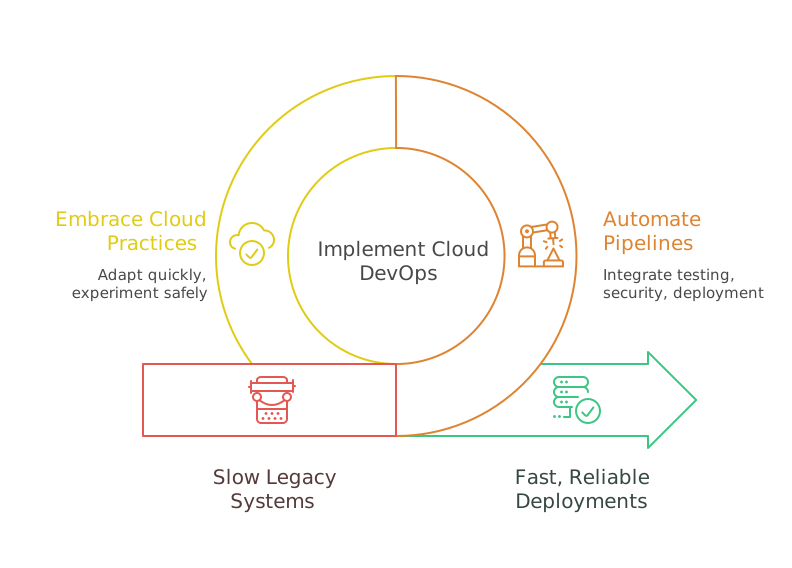
Traditional IT operations feel like driving with the parking brake on. You’ve got separate teams for development, testing, security, and deployment. Each handoff creates delays, miscommunication, and finger-pointing when things go wrong.
DevOps automation changes everything. Instead of throwing code over the wall between teams, you’ve got integrated pipelines that automatically test, secure, and deploy changes.
What used to take weeks now happens in hours.
The difference being speed and reliability. Manual processes introduce human error at every step. Automated cloud deployment pipelines eliminate those mistakes, creating consistent, repeatable results every time.
Why Legacy Businesses Need Cloud DevOps Now
Your competitors aren’t waiting. Netflix and Etsy achieved 50% faster time-to-market by embracing cloud DevOps practices. While they’re rapidly iterating and responding to customer needs, businesses stuck in traditional operations are falling behind.
Legacy systems create specific challenges that cloud DevOps directly addresses. Your one-size-fits-all systems (monolithic architectures) make changes risky and slow. Manual deployment processes create bottlenecks that frustrate customers and employees alike.
Digital transformation today has become crucial for survival.
The businesses thriving today are those that can adapt quickly, experiment safely, and deliver value continuously. Cloud DevOps provides the foundation for all three.

Suggested reading:
What Is DevOps and Why Your Business Needs It: The Complete Guide to DevOps in 2025
Overcoming Security Concerns with DevSecOps Implementation
Security fears derail more cloud DevOps initiatives than technical challenges.
Many businesses struggle with:
- Protecting customer data
- Meeting compliance requirements
- Maintaining business continuity
The thought of moving fast while staying secure can feel impossible.
The Solution:
DevSecOps integrates security into every step of your process.
Security becomes an automated checkpoint rather than a final gate, catching issues early.
Key Insight: Security by design allows you to achieve both speed and safety.
When security controls are embedded in your cloud DevOps pipeline, you’re not choosing between speed and safety; you’re achieving both.
Building Security into Your Cloud DevOps Pipeline
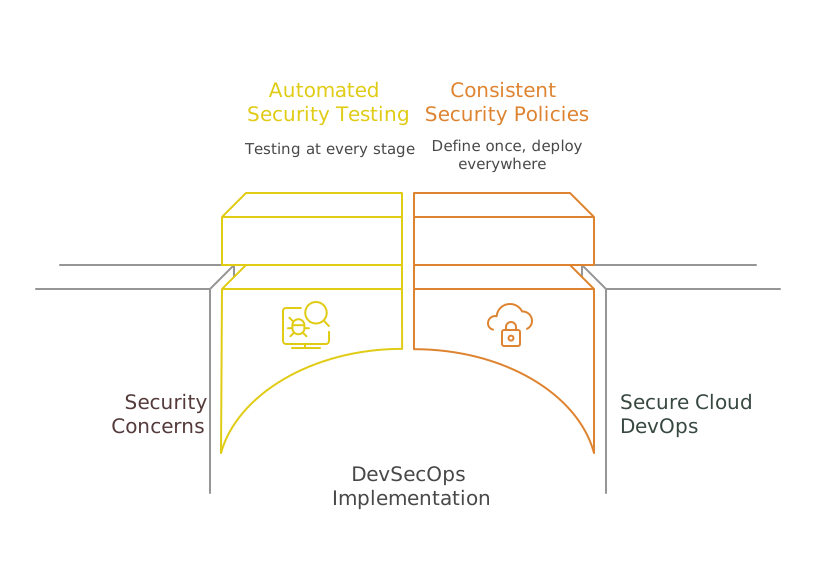
A smart DevOps pipeline includes automated security testing at every stage, eliminating the need for periodic manual checks. Key practices include:
- Continuous code scanning and configuration testing
- Compliance validation with every change
- Using tools like CSPM, CWP, and CIEM for full visibility
Why it works:
Automation removes human error, reduces breaches, and enforces policies consistently.
Multi-Cloud Security Strategies for Legacy Integration
Hybrid and multi-cloud deployments require a tailored approach. Challenges include:
- Managing multiple cloud providers, each with different tools
- Higher complexity, increasing potential vulnerabilities
Best Practice:
Enforce consistent security policies through code
- Define once, deploy everywhere automatically
- Maintain cloud-agnostic security to avoid vendor lock-in
- Ensure consistent protection across all environments
Benefit: Legacy businesses can modernise confidently while keeping security at the core of DevOps operations.
Is Your Business Data Still Trapped in Silos?
Unify your CRM, ERP, marketing, and finance tools with seamless business tools integration that keeps data flowing and teams aligned. From eliminating manual work to creating a single source of truth, every connection is designed for efficiency, reliability, and smarter decision-making.
Cost Optimization Through FinOps and Cloud DevOps Integration
Cloud costs can spiral out of control faster than you think.
Businesses often face unexpected bills due to:
- Leaving resources running
- Misconfigured auto-scaling
- Lack of real-time visibility
Some organizations have cut infrastructure costs by 30% by integrating FinOps with their DevOps workflows.
The key: Cloud cost optimization isn’t about spending less—it’s about spending smarter.
By embedding FinOps strategies into your DevOps process, you gain:
- Real-time visibility into spending
- Automated controls that prevent waste
- Cost optimization as part of the development process rather than an afterthought
The magic happens when cost optimization becomes part of your development process, not an afterthought that requires expensive cleanup projects.

Implementing Real-Time Cost Visibility and Control
Unexpected cloud spending is a common nightmare for finance teams.
Typical scenarios include:
- Test environments left running
- Resources used without proper tracking
- Spending exceeding budget limits
FinOps automation solves this by providing:
- Continuous cost monitoring
- Automated tagging of resources with expiration dates, cost centers, and usage policies
- Alerts and automatic scaling or termination for resources exceeding spending thresholds
Real-time dashboards show spending trends, resource utilization, and cost allocation, enabling proactive cost management.
Automation-Driven Cost Reduction Strategies
DevOps automation reduces operational costs by eliminating manual overhead.
Key practices include:
- Infrastructure as Code (IaC): Run only the resources you need
- Automated schedules: Start development environments when teams arrive, shut them down after hours
- Right-sizing instances based on actual usage
- Identifying unused resources
- Recommending reserved instances to reduce costs up to 75%
Automation turns cost optimization into a seamless, ongoing process rather than a reactive cleanup project.

Legacy System Integration and Hybrid Cloud Approaches
Legacy businesses often fear that adopting cloud DevOps could disrupt systems customers depend on. Downtime, data loss, or service interruptions are unacceptable during transformation.
The solution: You don’t need to start from scratch.
Hybrid cloud integration allows gradual modernization without risking business continuity. Legacy system integration requires a thoughtful approach that:
- Respects existing investments
- Builds a foundation for future growth
- Minimizes operational risk
Gradual Migration Strategies for Minimal Disruption
“Big bang” migrations can be catastrophic. Smart companies adopt incremental approaches, such as the strangler fig pattern, where new cloud-native services gradually replace legacy components.
Best practices include:
- Start with non-critical systems to learn without business risk
- Maintain parallel systems during the transition
- Gradually expand to more complex integrations as expertise grows
Benefit: Customers continue to access services uninterrupted, while new cloud systems handle increasing workloads.
This eliminates the all-or-nothing risk that can derail transformation projects.
Maintaining Business Continuity During Transformation
Business continuity depends on careful planning and robust fallback procedures.
Key strategies include:
- Monitoring systems to detect issues in real time
- Automated processes to redirect traffic or roll back changes if problems occur
- Disaster recovery by replicating systems across multiple cloud regions, ensuring failover without customer impact
Goal: Make transformation invisible to customers. They should experience improved performance and new features, not outages or disruptions.
Is Your Infrastructure Slowing Down Delivery and Driving Up Costs?
With managed cloud hosting solutions, legacy businesses gain scalable, reliable infrastructure that keeps applications fast, secure, and always available. From seamless migration and proactive monitoring to expert support, to reduce overhead and accelerate software delivery.
Building Cloud DevOps Capabilities and Addressing Skills Gaps
The biggest barrier to cloud DevOps success isn’t technology—it’s people.
Many legacy businesses struggle with:
- Insufficient cloud DevOps expertise
- High costs and competition for experienced hires
The solution:
You don’t need to replace your entire team.
The most successful transformations focus on upskilling existing staff who already understand your business and systems.
Approach:
- Structured training programs
- Hands-on experience through guided projects
- Gradual skill development to close the DevOps gap
Building a Collaborative DevOps Culture
A major challenge in DevOps transformation is culture change.
Development and operations teams often operate in silos, creating friction.
Key practices for success:
- Break down silos through shared responsibility for outcomes
- Align incentives, communication patterns, and goals across teams
- Encourage developers to care about operational stability and operations teams to care about feature delivery
Result:
A collaborative culture that enables DevOps to deliver faster, more reliable outcomes.
Measuring Success: ROI and Performance Metrics for Cloud DevOps
You can’t manage what you don’t measure.
DevOps ROI requires metrics that demonstrate real business value, not just technical improvements.
Successful companies track:
- Revenue impact
- Customer satisfaction
- Operational efficiency
Outcome: Companies achieving 50% faster time-to-market and 30% cost reduction focus on metrics that communicate value to executives in terms they understand and care about.

Key Performance Indicators for Legacy Business Transformation
DevOps KPIs for legacy businesses focus on transformation outcomes, not just operational metrics. You need to measure deployment frequency, lead time for changes, mean time to recovery, and change failure rate but connect them to business impact.
Business outcomes like:
customer acquisition cost
revenue per employee
and time-to-market for new features, shows how DevOps transformation drives competitive advantage.
The goal is to demonstrate that faster, more reliable operations directly support business growth and customer satisfaction.
Continuous Improvement and Optimization Strategies
Continuous improvement in DevOps means constantly optimizing based on real data. You’re not just implementing DevOps just once but also building capabilities that get better over time.
DevOps optimization requires feedback loops that connect operational metrics to business outcomes. When you can see how deployment frequency affects customer satisfaction or how automation reduces operational costs, you can make data-driven decisions about where to invest next.
The most successful transformations establish regular retrospectives that identify bottlenecks, celebrate wins, and plan improvements that drive even better results.
Your Path to Cloud DevOps Success
Cloud DevOps transformation doesn’t have to be overwhelming. This framework we’ve outlined with DevSecOps for security, FinOps for cost management, hybrid approaches for legacy integration, and structured training for skills development aids in providing a path that businesses have followed successfully.
The ROI potential is real with faster delivery and cost reductions, not just aspirational goals but achievable outcomes when you implement cloud DevOps properly. But success requires commitment to both technical excellence and cultural change.
The businesses that thrive in the next decade will be those that can adapt quickly, experiment safely, and deliver value continuously. Cloud DevOps provides the foundation for all three capabilities, transforming your legacy operations into a competitive advantage that drives growth and customer satisfaction.
Accelerate delivery, reduce IT overhead, and future-proof your operations with cloud DevOps solutions built for legacy businesses. Gain speed, stability, and scalability—without the complexity of going it alone.

Frequently Asked Questions
How long does it typically take for a legacy business to see ROI from cloud DevOps implementation?
Most businesses see initial benefits within 3-6 months, with full ROI typically achieved within 12-18 months. The key is starting with high-impact, low-risk projects that demonstrate value quickly while building team confidence and expertise.
What are the most critical security considerations when implementing DevSecOps in legacy environments?
The biggest concerns are data protection during migration, compliance with existing regulatory requirements, and maintaining security controls across hybrid environments. Address these through automated security testing, consistent policy enforcement, and comprehensive audit trails
How can businesses avoid vendor lock-in while adopting cloud DevOps practices?
Use cloud-agnostic tools and practices wherever possible, implement infrastructure as code with portable configurations, and focus on open standards rather than proprietary solutions. This maintains flexibility while capturing cloud DevOps benefits.
What skills should existing IT teams develop to support cloud DevOps transformation?
While IT teams can build cloud and automation skills, transformation takes time and risk. Outsourcing DevOps accelerates results, avoids costly missteps, and lets your team focus on growth instead of technical hurdles.
How do you measure the success of a cloud DevOps transformation in a legacy business?
Track both technical metrics (deployment frequency, lead time, recovery time) and business outcomes (time-to-market, customer satisfaction, operational costs). The goal is to demonstrate how operational improvements drive competitive advantage and business growth.